Laser cutting is changing from a stand-alone machine process into a connected part of modern manufacturing. In 2026, shops are paying closer attention to fiber-laser performance, automated material handling, sensor feedback, and software that helps operators adjust cutting parameters. The results show up on the shop floor: cleaner edges, less rework, and faster transitions between jobs. But progress is uneven. Older equipment, training gaps, and maintenance costs still matter.
So, what is the future of laser cutting technology? A useful perspective comes from John Powell, author of CO2 Laser Cutting and a specialist in industrial laser processing. In paraphrase, his work underscores a practical point: cutting quality depends on matching the laser, process settings, and material to the task. That remains relevant as systems become more automated. A smart machine cannot compensate for poor setup or unclear quality checks.
Small details count. A stable assist-gas supply, a clean protective window, and a well-calibrated cutting head can affect the edge finish as much as a new software feature. Automation may reduce repetitive handling, while real-time monitoring can help flag drift before a batch is spoiled. Still, these tools need reliable data and skilled people. Some forecasts make the transition sound effortless. It isn’t. This outline explores the trends shaping laser cutting in 2026, where measurable gains are emerging, and what manufacturers should question before investing.
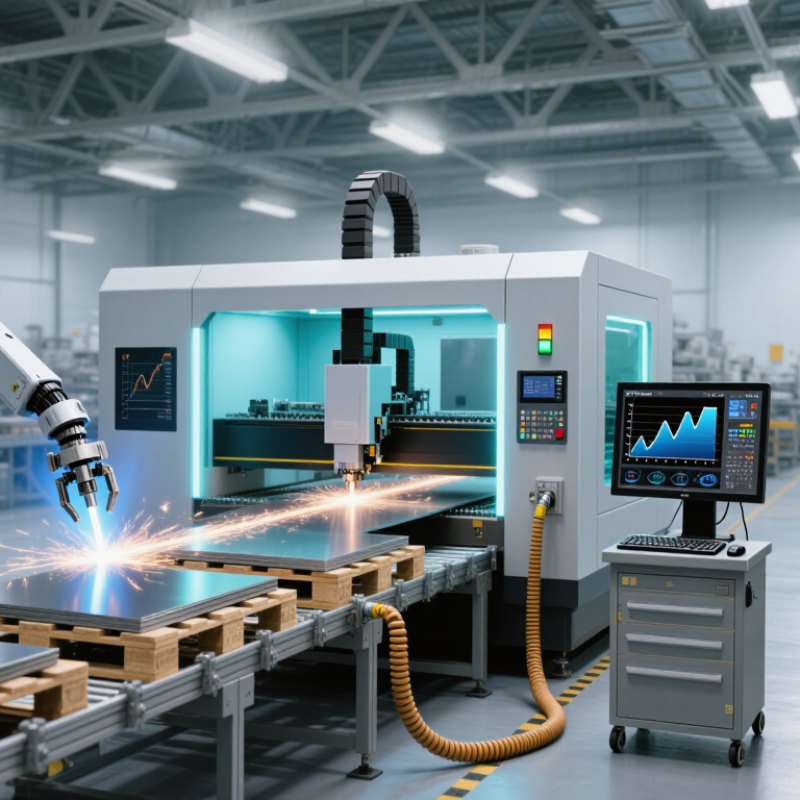
2026 Top Laser Cutting Trends: What Is the Future?
Laser Cutting in 2026: Core Technologies and Key Terms
In 2026, laser cutting depends on more than source power. Fiber lasers are widely used for sheet metal, while CO2 systems remain useful for some nonmetals. The right choice depends on material, thickness, edge quality, and operating costs. No single setup fits every workshop. That is easy to overlook.
A few terms explain what happens at the cutting head. Kerf is the width of material removed; a narrow kerf can help preserve small features. Focus position shapes energy concentration, while assist gas clears molten material from the cut. Nitrogen can help limit oxidation on some metals, but gas choice and pressure require testing. Piercing time, cutting speed, and heat buildup also affect throughput and edge quality. Newer sensors can monitor processes and flag changes, yet they cannot replace sound maintenance or operator judgment. I would not treat automation as a guarantee of perfect parts.
Tips: Keep a small test sheet for each material and thickness. Record focus, speed, gas pressure, and results. Check the cut edge under steady light. A rough corner may point to heat, focus, or motion issues—not simply low power.
Representative wavelengths of laser sources used in cutting applications
Wavelength affects how laser energy interacts with a material. Fiber lasers commonly operate near 1.07 μm, CO₂ lasers near 10.6 μm, green lasers near 0.532 μm, and UV lasers near 0.355 μm. These are representative values; actual specifications vary by system. Wavelength alone does not determine cutting speed or material capability.
Laser cutting is moving beyond raw power. Modern fiber sources deliver stable beams that can cut thin sheet quickly and handle thicker plate with suitable settings. Yet higher wattage alone does not guarantee a cleaner edge. Material grade, surface condition, and assist-gas flow still shape the result.
Optics are becoming more adaptable. Beam-shaping elements can adjust energy distribution for different thicknesses, while autofocus systems keep the focal point aligned as the cutting head moves. A well-focused beam leaves a narrow kerf and reduces dross, the rough metal residue along an edge. Small setup errors matter. A dirty protective window or worn nozzle can undo the benefits of precise optics.
Sensors and software can help maintain consistency. Cameras and process monitoring may detect changes in the cut, giving operators a chance to adjust speed or power. This is useful when a sheet has uneven coating or slight warping. Still, automation is not a substitute for judgment. Real production materials vary, and a system can misread an unusual surface. Better sources and optics are raising expectations, but reliable precision still depends on calibration, maintenance, and hands-on testing.
In 2026, laser cutting is becoming less of a stand-alone process and more of a connected production cell. Automated loading and unloading can reduce idle time, while sensors monitor focus, assist gas, and cutting conditions. AI tools can flag unusual power readings or suggest adjustments when a cut edge looks rough. These alerts help operators respond sooner, but they do not replace process knowledge. A reflective surface, worn nozzle, or poorly maintained lens can still confuse a system. The data is not always clean.
Tips: Start with one measurable task, such as tracking piercing delays or sheet utilization. Check that machine settings, material records, and inspection results use consistent labels. Keep an operator in the loop, especially when a proposed adjustment could affect part quality. Small trials reveal practical limits.
Connected systems can also link job schedules with machine status, helping teams spot bottlenecks before a queue builds. A dashboard might show that one material thickness repeatedly needs extra setup time. That detail can improve planning. Still, connectivity brings work: teams need reliable networks, clear access controls, and regular checks on sensor accuracy. AI predictions may look precise while missing an important shop-floor detail. Not every shift runs alike. Skilled operators remain essential for interpreting results, correcting bad inputs, and deciding when a recommendation does not fit the material or the job.
| Trend | What Is Changing | Useful Performance Measures | Practical Benefit | Implementation Consideration |
|---|---|---|---|---|
| Automated material handling | Loaders, unloaders, storage towers, and part-sorting equipment are increasingly integrated with cutting cells. | Machine utilization; loading and unloading time; parts sorted per shift; manual handling time. | Reduces repetitive handling and can keep the machine cutting during unattended periods when the cell is configured for it. | Plan for floor space, material flow, safe access, and reliable handling of different sheet sizes and thicknesses. |
| AI-assisted process monitoring | Software can use machine and process signals to identify unusual conditions, flag quality risks, or support parameter selection. | Alarm frequency; scrap and rework rate; cut interruptions; false-alert rate; time to resolve process issues. | Helps operators detect process variation earlier and make more consistent, data-informed adjustments. | AI recommendations require suitable data and operator review; they do not replace process validation or safe operating procedures. |
| Predictive maintenance | Maintenance teams increasingly review operating hours, alarms, component condition, and service history to plan work before failures occur. | Unplanned downtime; mean time between failures; maintenance hours; repeat fault rate. | Can improve maintenance planning and reduce unexpected production interruptions. | Condition monitoring is most useful when machine records are consistent and maintenance actions are documented. |
| Connected production systems | Cutting machines may exchange job, status, and production data with scheduling, manufacturing execution, or quality systems. | Job-status accuracy; schedule adherence; data completeness; time spent on manual production reporting. | Improves visibility of work in progress and supports production planning across connected operations. | Check data formats, network security, access controls, and compatibility with existing systems before integration. |
| Smarter nesting and job planning | Nesting software can arrange parts on sheets while accounting for material, part geometry, cutting sequence, and production priorities. | Material utilization; remnant reuse; setup time; total cutting time per job. | Efficient layouts can reduce avoidable sheet waste and help balance material use with delivery requirements. | Results depend on accurate drawings, material definitions, cutting rules, and realistic production priorities. |
| Flexible, right-sized laser sources | Fiber lasers are widely used for metal sheet cutting, while suitable laser type and power depend on material, thickness, quality needs, and process requirements. | Cutting speed by material and thickness; edge quality; energy use per part; consumable use. | Matching the process to the job can support productive cutting across a defined range of materials and thicknesses. | Do not select a system by power rating alone; verify application capability with representative materials and production parts. |
| In-process sensing and quality checks | Sensors and monitoring functions can help identify cutting interruptions or process conditions that may affect part quality. | Cut interruptions; parts requiring inspection; dimensional conformity; rework rate. | Earlier detection can limit the number of parts affected by a process problem. | Monitoring complements, rather than replaces, appropriate inspection methods and documented quality criteria. |
| Safety integrated into automated cells | Enclosures, interlocks, access controls, and risk assessments remain central as loading and sorting automation expands. | Safety incidents and near misses; interlock checks; training completion; corrective-action closure. | A properly assessed cell helps protect people while supporting organized material flow and machine access. | Automation changes can introduce new hazards; assess the complete cell and follow applicable local safety requirements. |
Note: These are technology and operational trends, not guaranteed performance outcomes. Actual results depend on the material mix, part design, equipment configuration, operator practices, and production environment.
In 2026, laser cutting is moving beyond familiar mild steel and stainless sheet. Shops are testing more aluminum alloys, thin copper foils, high-strength steels, and engineered plastics. Each material changes the process. Copper reflects much of the laser energy, while plastics can soften or release harmful fumes if settings and extraction are poorly matched. There is no single recipe. Operators need to verify focus, speed, assist gas, and edge quality on the actual material batch. Small trials matter.
These capabilities are widening industrial use. Battery production needs precise cuts in thin metal foils, and aerospace suppliers work with lightweight alloys and layered materials. Medical-device makers also use lasers for small, repeatable components, though cleanliness and inspection remain essential. Composite cutting is promising, but heat can damage resin or leave rough edges. That part is not solved everywhere. A clean-looking cut may still hide internal damage, so inspection methods must match the material and the part’s role. As materials diversify, the strongest advantage may be flexible process control, not simply faster cutting.
Laser cutting is becoming faster and more precise, but the future depends on more than cutting speed. Safety begins with a properly enclosed machine, functional interlocks, and extraction suited to the material. Operators should follow equipment guidance and check ventilation, lenses, and work surfaces regularly. Small maintenance gaps can become serious risks. They are easy to overlook.
Sustainability also depends on everyday choices. Nesting parts closely can reduce sheet waste, while stable settings may limit rejected cuts. Efficient extraction and sensible idle-time practices can help manage energy use. Tips: Check extraction before each shift. Record material, settings, and results. Keep offcuts sorted for reuse where practical.
Challenges remain. New materials and mixed production jobs can make settings harder to standardize. A clean edge on one sheet may produce excess dross on another. Test cuts and documented adjustments help, though they take time. Smaller workshops may also struggle to fund upgrades or staff training. That trade-off deserves attention, not a quick promise of “green” production. The technology will improve, but safe routines and honest process records still matter. And sometimes, a slower cut is the better choice.
No. Material grade, surface condition, and assist-gas flow also affect edge quality. More power is not a fix-all.
They adjust energy distribution for different material thicknesses. Autofocus keeps the focal point aligned as the cutting head moves, helping create a narrow kerf. Setup still matters.
Poor focus, unsuitable settings, or incorrect gas flow can leave rough metal residue. A dirty protective window or worn nozzle can also affect the edge. Small parts matter.
Cameras and process monitoring may detect uneven coating or slight sheet warping. Operators can then adjust speed or power. Sensors can misread unusual surfaces.
Start with one measurable task, such as tracking piercing delays or sheet utilization. Compare results across several jobs. Keep the trial small.
No. AI can flag unusual readings or suggest adjustments, but it may miss a reflective surface or worn nozzle. Operators should review changes that affect part quality.
Linking job schedules with machine status can reveal bottlenecks before queues grow. Repeated setup delays for one sheet thickness may help teams plan better. Not every shift behaves alike.
Use consistent labels for settings, materials, and inspection results. Check network reliability, access controls, and sensor accuracy regularly. A polished dashboard can still be wrong. I would question it.
Laser cutting in 2026 is being shaped by improvements across the entire process, from laser sources and optical systems to motion control and precision. More stable beams, refined focusing, and smarter process monitoring can help manufacturers achieve cleaner edges, tighter tolerances, and consistent results across a wider range of materials. Automation and artificial intelligence are also making cutting systems more responsive, enabling them to adjust settings, detect irregularities, and coordinate with connected production equipment.
So, what is the future of laser cutting technology? It lies in combining greater accuracy with adaptable, data-informed manufacturing. New material combinations and expanding uses in fields such as transportation, construction, and electronics will create fresh opportunities, while safety and sustainability remain essential priorities. Managing energy use, material waste, system complexity, and workforce training will be key challenges. Continued progress will depend on balancing productivity and innovation with reliable operation and responsible resource use.

Stylo Laser