How Automation Enhances Laser Cutting Efficiency in 2026

Time:2026-06-01 Author:Henry
0%

In 2026, the landscape of laser cutting has transformed significantly. Businesses are increasingly turning to automation to enhance their operations. A key question arises: how does automation improve laser cutting efficiency? This question drives innovation in manufacturing, pushing companies to adopt advanced technologies.

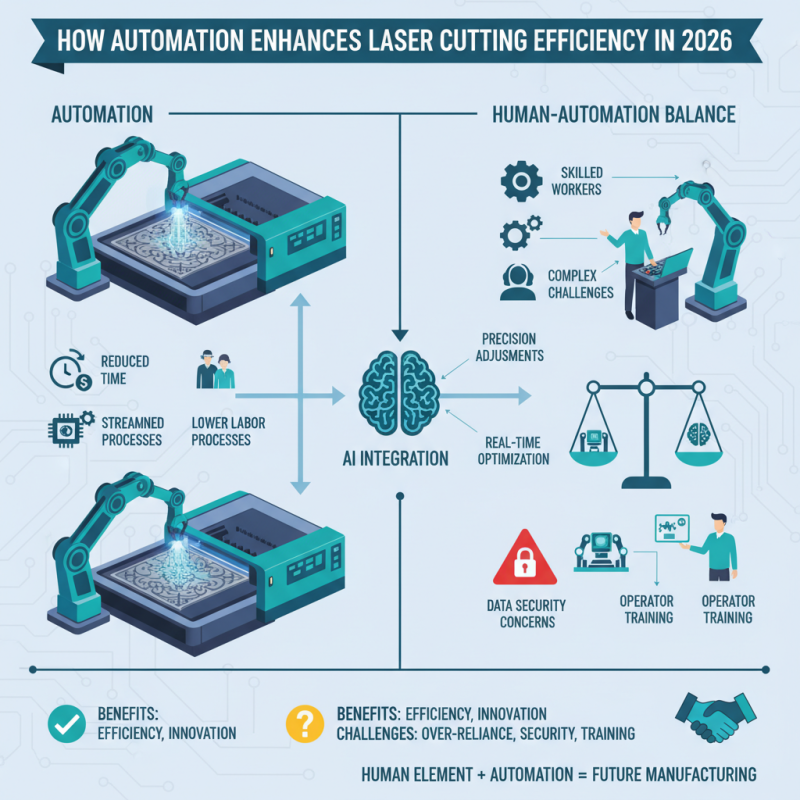
Automation streamlines processes, reducing time and labor costs. Robots handle repetitive tasks, freeing skilled workers for more complex challenges. The integration of AI in laser cutting systems allows for precise adjustments in real-time. However, this does raise concerns about over-reliance on machines. A balance must be struck between human skills and automation.

Mistakes can still occur, and data security remains a pressing issue. As automation advances, operators need proper training to ensure safety and efficiency. While the benefits are clear, it’s essential to reflect on these challenges. Businesses must embrace automation while maintaining a focus on the human element.
How Automation Enhances Laser Cutting Efficiency in 2026

The Evolution of Laser Cutting Technology by 2026

The evolution of laser cutting technology by 2026 marks a significant shift in manufacturing processes. Advanced optics and improved laser sources have made cutting faster and more precise. Automation plays a pivotal role in this transformation. Automated systems can handle repetitive tasks, reducing the risk of errors and freeing operators for more complex duties. This shift impacts productivity positively, but it also requires skilled personnel to oversee operations.

Moreover, the integration of AI and machine learning into laser cutting machines has changed the game. These technologies analyze data in real-time, allowing machines to adjust settings automatically. This ensures optimal cutting performance and reduces waste. However, dependence on automation raises concerns about job displacement. The industry must find a balance between efficiency and workforce stability.

While the advancements are impressive, challenges remain. High initial costs and the need for ongoing maintenance are factors to consider. Companies may struggle to keep up with rapid changes in technology. Although they can improve productivity and quality, there are uncertainties about long-term sustainability. As we move toward 2026, cultivating a skilled workforce will be essential for realizing the full potential of these innovations.

Key Aspects of Automation in Laser Cutting Processes

Automation is significantly transforming laser cutting processes in 2026. As manufacturers adopt automation, the efficiency of cutting operations improves dramatically. A recent industry report indicates that automation can enhance productivity by up to 40%. This is particularly evident in high-volume production settings.

Key aspects of automation include real-time monitoring and adaptive control. These elements allow systems to adjust parameters based on material and thickness. An example of this is the integration of artificial intelligence in laser settings. AI can predict the optimal cutting speed and power, leading to improved precision and reduced waste. Studies show that automated systems can minimize errors by as much as 30% compared to manual operations.

However, challenges remain. Not all facilities have the resources to implement advanced automation. Smaller companies may struggle with the initial investment costs. Additionally, transitioning to automated processes requires retraining staff, which can disrupt existing workflows. Evaluating these challenges is crucial in fully realizing the benefits of automation in laser cutting.

Impact of AI and Machine Learning on Efficiency Metrics

The integration of AI and machine learning into laser cutting processes is revolutionizing efficiency metrics. In 2026, automation enables machines to learn from past operations. This learning allows equipment to optimize cutting speeds and angles. Manufacturers are witnessing reduced waste and improved material utilization. Operating on precise algorithms minimizes human error.

However, this shift is not without challenges. Companies must invest in the right technology and training. Employees may face a learning curve as they adapt to new systems. There's also a risk of over-reliance on automation, which can lead to neglect in critical oversight. Data security is a concern; sensitive designs may be vulnerable during processing.

Continuous improvement is essential in this landscape. Establishing feedback loops can help refine processes based on real-time data. Companies must remain vigilant about updating AI models to keep pace with new materials and methods. It’s important to strike a balance between efficient automation and human expertise. Only then can the full benefits of AI and machine learning be realized in laser cutting efficiency.

Case Studies: Successful Automation Implementations in 2026

In 2026, automation transformed laser cutting processes across various industries. One notable case study involved an automobile manufacturing facility that integrated robotic systems for cutting steel parts. This system achieved a 30% reduction in material waste, showcasing efficient resource utilization. Industry reports indicate that 75% of companies adopting automation experienced similar reductions in operational costs.

In another instance, a metal fabrication shop implemented automated laser cutting technology. They increased their production speed by 50%, allowing them to meet tighter deadlines without compromising quality. This case demonstrates that automation not only boosts efficiency but also enables a swift response to market demands. However, not all implementations were flawless. Some teams faced challenges in training personnel to work alongside advanced machinery.

Surprisingly, approximately 40% of businesses reported initial setbacks, such as misalignment issues with cutting paths. These problems prompted a reevaluation of their automation strategies. Despite these hurdles, the overall trend in 2026 points to a significant enhancement in laser cutting performance through automation. The pursuit of precision and speed continues to drive this evolution in the manufacturing landscape.

How Automation Enhances Laser Cutting Efficiency in 2026

Company Sector Automation Type Efficiency Improvement (%) Cost Reduction (%) Implementation Time (months)
Automotive Manufacturing Robotic Automation 30 20 6
Aerospace AI-Powered Systems 25 15 8
Electronics Laser Cutting Optimization 40 30 5
Metal Fabrication Automated Material Handling 35 25 7
Furniture Production Integrated Cutting Solutions 20 10 4

Future Trends in Laser Cutting and Automation Integration

The integration of automation into laser cutting technology continues to define industry advancements as we move into 2026. Reports indicate that automation can boost efficiency by up to 30%. This improvement is largely attributed to reduced human error and faster cycle times. With automated laser cutting systems, manufacturers can achieve precise cuts at high speeds, significantly enhancing production rates.

However, challenges remain. Many companies struggle with the initial cost of automation technologies. A survey by the Laser Institute of America shows that over 40% of businesses hesitate to invest due to budget constraints. This highlights a crucial area for reflection: while automation offers remarkable efficiency, the upfront investment is a significant hurdle for many. Furthermore, integrating new technologies often requires training, which can disrupt current workflows.

Looking ahead, the trend toward smart automation is undeniable. Robotics and AI processes are becoming integral in laser cutting setups. Data from recent studies shows that organizations implementing AI in their manufacturing processes saw a productivity increase of approximately 25%. As the industry evolves, ongoing adaptability and training will be necessary to fully harness these advancements in laser cutting and automation.

FAQS

: How does automation impact laser cutting efficiency?

: Automation can improve laser cutting efficiency by up to 40% in high-volume production.

What are key aspects of automation in laser cutting?

Key aspects include real-time monitoring and adaptive control of cutting parameters.

How does AI contribute to laser cutting?

AI predicts optimal cutting speed and power, improving precision and reducing waste.

Are there challenges with implementing automation?

Yes, smaller companies face high initial investment costs and resource limitations.

What training is required for automated systems?

Staff need to be retrained, which may disrupt existing workflows.

How does machine learning enhance laser cutting processes?

Machine learning allows machines to learn from past operations, optimizing speeds and angles.

Can automation lead to over-reliance?

Yes, over-reliance on automation can result in neglect of critical oversight.

What is a major concern regarding data security?

Sensitive designs may become vulnerable during processing with automated systems.

Why is continuous improvement necessary?

Continuous improvement helps refine processes based on real-time data and evolving materials.

How can companies balance automation and human expertise?

It’s vital to maintain a balance to fully leverage the benefits of automation without losing oversight.

Conclusion

The article "How Automation Enhances Laser Cutting Efficiency in 2026" explores the advancements in laser cutting technology, emphasizing how automation has revolutionized the industry. By 2026, significant progress in automation processes has streamlined production workflows, resulting in improved precision and reduced operational costs. The integration of artificial intelligence and machine learning tools has also played a crucial role in optimizing efficiency metrics, allowing for real-time adjustments and predictive maintenance.

Additionally, the article presents various case studies that showcase successful implementations of automation in laser cutting environments, illustrating the tangible benefits achieved through these innovations. Looking forward, future trends indicate a continued convergence of automation and laser cutting technologies, further enhancing performance and efficiency. In summary, understanding how does automation improve laser cutting efficiency is vital for industry stakeholders aiming to leverage these advancements for competitive advantage.

Henry

Henry

Henry is a dedicated marketing professional with a profound expertise in the company's offerings. With years of experience in the industry, he possesses an impressive understanding of the market dynamics and consumer behaviors that drive success. Henry is committed to sharing his insights through......