2026 Best Ceramic Laser Processing for Which Industries?

Time:2026-10-09 Author:Sienna
0%

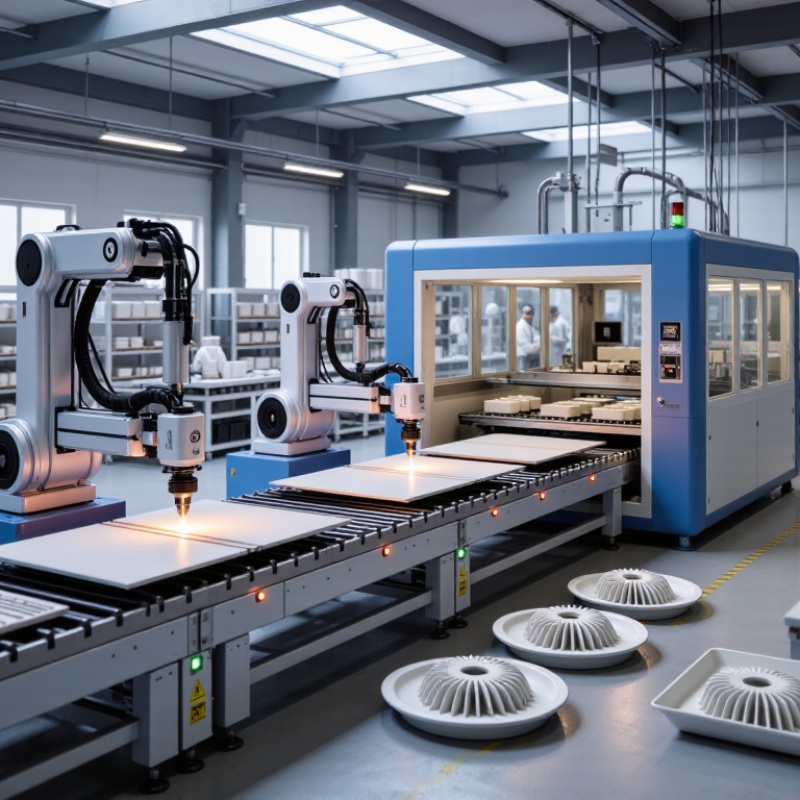
Ceramic laser processing is moving from specialist workshops into high-value manufacturing lines. It shapes, drills, cuts, marks, and welds advanced ceramics with tight control around heat-affected zones. That precision matters when a component must survive vibration, corrosion, high voltage, or extreme temperature.

So, what industries use ceramic laser processing? The answer spans electronics, medical devices, aerospace, automotive, energy, and semiconductor manufacturing. In its Global EV Outlook 2024, the International Energy Agency reported nearly 14 million electric car sales in 2023. This growth increases demand for ceramic separators, battery components, sensor substrates, and power-electronics insulation. The Semiconductor Industry Association also described semiconductor demand as a major driver of continued manufacturing investment in its 2024 State of the U.S. Semiconductor Industry report. Ceramic processing supports these systems through precise vias, slots, microchannels, and surface markings.

Aerospace manufacturers use ceramic matrix composites and thermal-barrier parts near combustion zones. Medical companies use bioinert ceramics for implants and dental components. Electronics producers rely on alumina and aluminum nitride substrates for thermal management. The International Energy Agency’s World Energy Investment 2024 report further showed strong global investment in clean-energy technologies, creating new opportunities for ceramic heat sinks and insulating parts.

Still, laser processing is not automatically the best solution. Material porosity, grain structure, thickness, and laser wavelength can change the result. Published market forecasts also vary because researchers define “ceramic processing” differently. Practical trials remain essential. This guide examines the industries, applications, equipment choices, and quality controls shaping ceramic laser processing in 2026.
2026 Best Ceramic Laser Processing for Which Industries?

What Is Ceramic Laser Processing in 2026?

Ceramic laser processing uses focused light to cut, drill, mark, or texture hard ceramic materials. In 2026, manufacturers use it for electronic substrates, medical components, sensors, aerospace parts, and energy devices. Unlike mechanical tools, a laser can create tiny holes without physical contact. This matters when a component is thin, brittle, or difficult to clamp. Short-pulse lasers remove material with limited heat transfer. However, “cold processing” is not perfectly cold. Heat-affected zones, microcracks, and rough edges can still appear.

Modern systems combine beam control, high-speed scanning, and camera inspection. Operators adjust pulse duration, energy, focus position, and repetition rate for each ceramic type. Alumina may respond differently from zirconia or silicon nitride. A process that works on a flat sample can fail near a corner. That practical gap deserves more attention. Production teams often test small batches before approving a stable recipe. Data monitoring can detect power changes and positioning errors, but it cannot replace skilled inspection.

Tips: Start with a material test coupon. Check edge chipping under magnification. Use gentle passes instead of one aggressive pass when quality matters. Keep the ceramic clean and firmly supported. Record every parameter, including nozzle distance and cooling conditions. Some surfaces still need light polishing after laser work. That extra step may seem inefficient, yet it can improve fit, sealing, and electrical reliability.

How Does Ceramic Laser Processing Work?

Ceramic laser processing works by directing a concentrated light beam onto a ceramic surface. The beam removes material through melting, vaporization, or controlled fracture. Ceramic is hard and often brittle. Its response also changes with composition, thickness, and surface finish.

Short-pulse lasers usually limit heat transfer into nearby areas. This helps create narrow slots, holes, and detailed patterns. A computer-controlled stage moves the beam along a programmed path. Assist gas can clear debris from the cutting zone. Operators adjust power, pulse duration, speed, focus, and repetition rate. Small changes matter. Too much energy may create cracks or a rough edge.

The method supports electronic substrates, medical components, aerospace parts, energy devices, and laboratory equipment. For example, a thin ceramic plate may receive tiny cooling holes without mechanical contact. Engineers inspect edges under magnification and measure dimensions after processing. The process is precise, but not effortless. A polished surface does not guarantee a defect-free cut. In production trials, hidden microcracks can appear after cleaning or thermal cycling. Process validation should include microscopy, strength testing, and repeated samples. Simulation helps, but real ceramic behavior can still surprise experienced technicians.

Which Industries Use Ceramic Laser Processing?

Ceramic laser processing serves industries that need small features, clean edges, and stable insulation. Electronics remains a major user. Alumina, aluminum nitride, and silicon nitride substrates support power modules, sensors, and high-frequency circuits. The Spring 2024 World Semiconductor Trade Statistics forecast global semiconductor sales at 611.2 billion US dollars in 2024. That expansion increases demand for precise ceramic drilling, trimming, and surface marking.

Automotive and electric vehicle production also rely on processed ceramics. Laser systems create holes in sensor housings, battery insulation parts, and ceramic circuit carriers. The International Energy Agency reported more than 14 million electric cars sold worldwide in 2023. Ceramic components must tolerate heat, vibration, and repeated electrical loads. Small defects matter. Very much.

Medical engineering uses zirconia and alumina for dental parts, surgical tools, and implant components. Lasers can shape narrow channels without applying mechanical pressure. Aerospace and energy equipment use ceramic parts around burners, turbines, and high-temperature electrical systems. Processing accuracy helps reduce material waste, especially with expensive technical ceramics.

However, laser processing is not automatically the best choice. Reflective surfaces, internal stress, and heat-affected zones can reduce reliability. Operators must match wavelength, pulse duration, and cooling method to each ceramic grade. Industry reports provide useful market direction, but factory results still depend on thickness, geometry, and inspection standards. That practical gap deserves more attention.

What Ceramic Components Can Be Laser Processed?

Ceramic components are widely laser processed because they resist heat, chemicals, and electrical current. Common materials include alumina, zirconia, aluminum nitride, and silicon nitride. Each reacts differently to laser energy, so one setting rarely fits every part.

Laser cutting produces thin ceramic substrates, circuit carriers, washers, and insulation plates. Drilling creates precise holes in sensor bodies, nozzles, feedthroughs, and multilayer components. Fine lasers can also trim resistive paths, open channels, and texture surfaces. In medical equipment, zirconia parts may receive slots or small openings. In electronics, aluminum nitride heat spreaders often need controlled holes and edge shaping. Ceramic tubes, rings, spacers, and custom housings can also be marked or micro-machined.

Tips: Confirm the ceramic grade before processing. Measure thickness, density, and surface finish. Use test coupons to check cracks, taper, and heat-affected areas. Keep inspection practical with microscopy and dimensional checks. A perfect edge is not guaranteed. Even a small internal crack may appear days later. That risk is easy to underestimate. Lower energy, multiple passes, and suitable fixturing can improve results, but they may increase production time. Designers should allow for kerf width and edge cleanup. Not every component deserves laser treatment; sometimes mechanical finishing remains the more reliable choice.

How to Select the Right Ceramic Laser Processing Method?

2026 Best Ceramic Laser Processing for Which Industries?

How to Select the Right Ceramic Laser Processing Method?

Choosing a ceramic laser processing method starts with the material, not the machine. Alumina, zirconia, aluminum nitride, and glass ceramics react differently to heat. Their density, thickness, additives, and surface finish affect the result. Electronics packaging may need clean micro-holes, while medical components often require smooth edges and strict traceability. Aerospace parts demand stable tolerances across repeated batches.

For thin ceramic sheets, ultrashort pulses can reduce heat-affected zones and limit cracking. For deeper cuts, longer pulses may improve productivity, but they can leave more debris. Pulse duration matters. So does wavelength. I have seen a promising cut fail after inspection because its edge looked clean but contained hidden microcracks.

Use trial coupons that match the actual thickness and composition. Measure kerf width, taper, roughness, chipping, and subsurface damage with microscopy or cross-sectional checks.

Geometry also guides the choice. Complex channels may need beam steering, while flat outlines can use a simpler scanning path. Keep clamping stress low. Ceramic is brittle, and a fixture can create failure before processing begins. Ask for data from comparable materials, not only attractive sample photos.

My own process reviews sometimes underestimated cleaning time after cutting. That mistake affected the real production cost. Record laser settings, gas flow, feed rate, and inspection results during every trial. Then compare performance, yield, maintenance needs, and certification requirements before selecting the method.

FAQS

What is ceramic laser processing?

It uses focused light to cut, drill, mark, or texture hard ceramic materials. No physical tool contact is required.

Which ceramic materials can be processed?

Common materials include alumina, zirconia, aluminum nitride, silicon nitride, and glass ceramics. Each reacts differently to laser energy.

What ceramic parts can lasers produce?

Lasers can process substrates, washers, insulation plates, tubes, rings, spacers, housings, and sensor components.

Can laser processing create tiny ceramic holes?

Yes. It can create holes in nozzles, feedthroughs, sensor bodies, and multilayer components. Hole taper still needs inspection.

How should I choose a processing method?

Start with the ceramic type, thickness, density, additives, and surface finish. Geometry and tolerance also influence the method.

Do ultrashort pulses prevent cracking?

They can reduce heat transfer and heat-affected zones. They cannot guarantee crack-free results. Hidden microcracks may appear later.

What should be checked after laser processing?

Inspect chipping, kerf width, taper, roughness, debris, and subsurface damage. Use magnification and dimensional checks.

How can production teams improve processing consistency?

Test matching coupons first. Record pulse settings, focus position, gas flow, feed rate, nozzle distance, and cooling conditions.

Is post-processing sometimes necessary?

Yes. Light polishing may improve fit, sealing, and electrical reliability. It also adds time and cost.

Is laser processing always better than mechanical finishing?

No. Lasers suit delicate or complex parts, but mechanical finishing may remain more reliable for certain components. The answer depends on testing.

Conclusion

Ceramic laser processing in 2026 is an advanced manufacturing approach that uses controlled laser energy to cut, drill, mark, shape, or modify ceramic materials with high precision. Unlike traditional mechanical methods, it can produce fine features, narrow cuts, and complex geometries while reducing physical contact and tool wear. The process may involve different laser wavelengths, pulse durations, and power levels, depending on the ceramic’s hardness, thickness, thermal sensitivity, and required surface quality.

A key question is what industries use ceramic laser processing. Applications are expanding across electronics, semiconductor equipment, medical devices, aerospace, energy systems, automotive components, and precision manufacturing. Commonly processed parts include ceramic substrates, insulators, tubes, plates, housings, nozzles, sensors, and microfluidic components. Selecting the right method requires evaluating material composition, geometry, dimensional tolerances, production volume, edge quality, heat-affected zones, and post-processing needs. A suitable solution balances accuracy, efficiency, surface integrity, and overall manufacturing cost.

Sienna

Sienna

Sienna is a skilled marketing professional with a deep expertise in our company’s core products and services. With a passion for innovation and detail, she plays a pivotal role in crafting insightful blog posts that not only highlight the unique features of our offerings but also provide valuable......