Fiber laser technology has emerged as a game-changer in the metal processing industry. Research indicates that the global fiber laser market for metal applications is projected to reach USD 2.5 billion by 2025, with a CAGR of 10.3%. This growth highlights the overwhelming preference for fiber lasers in manufacturing settings. Notably, their efficiency and precision have made them the go-to choice for industries such as aerospace, automotive, and electronics.
Why is fiber laser widely used in metal processing? The answer lies in its ability to deliver high-quality cuts with minimal thermal distortion. Additionally, these lasers can operate continuously without needing extensive maintenance. This reliability reduces downtime and operational costs. Despite their advantages, some challenges exist. For instance, fiber lasers can be less effective with reflective materials, and initial investment costs may deter smaller businesses. However, as technology advances, solutions to these issues are continually evolving, showing promise for even greater adoption.
Ultimately, the shift towards fiber laser technology poses questions about traditional metalworking methods. As companies adapt to this change, understanding the reasons behind its dominance will be essential for future competitiveness in the metal processing landscape.
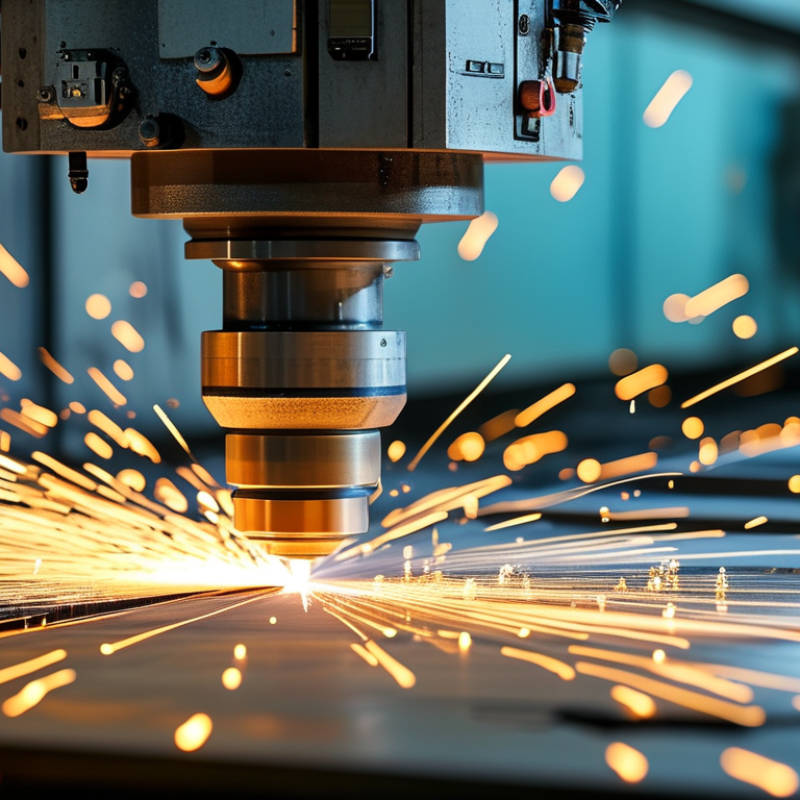
Fiber laser technology has gained prominence in the metal processing industry due to its unique advantages. By employing a solid-state laser, fiber lasers achieve high power density and efficiency. According to a report by MarketsandMarkets, the fiber laser market is projected to reach $7.9 billion by 2026, reflecting a compound annual growth rate (CAGR) of 10.9%. This growth is driven by increased demand in sectors like automotive and aerospace, where precision and speed are crucial.
One key benefit of fiber lasers is their versatility in handling various metals, including steel, aluminum, and copper. Their ability to cut, engrave, and weld has transformed manufacturing processes, offering a combination of speed and quality. However, some operations may require adjustments to optimize laser settings, which can be challenging for new users. Understanding these intricacies is vital for success.
Tips: Always conduct material tests before initiating production runs. This ensures that the settings are optimized for the specific type of metal being processed. Regular maintenance of the laser equipment is essential to maintain its performance and longevity.
Fiber lasers have transformed the metal processing industry due to significant advantages over traditional laser technologies. They offer higher efficiency and better beam quality. This results in faster cutting speeds and higher precision. Operators appreciate consistent performance, leading to improved productivity.
Tips: Regularly maintain your fiber laser system. This will ensure optimal performance and longevity. Even small issues can lead to reduced efficiency over time.
Additionally, fiber lasers are more user-friendly. Their compact design requires less space. This is crucial for small workshops with limited room. The lower energy consumption also contributes to cost savings. However, adapting to new technologies can be challenging. Operators may need time to adjust.
Tips: Invest time in training operators. Familiarity with the technology can significantly enhance productivity. Encourage feedback to address any concerns early on.
Fiber lasers have gained significant traction in metal fabrication and welding due to their efficiency and precision. These lasers produce a concentrated beam that can cut through various metals with exceptional speed. For example, in automotive manufacturing, fiber lasers streamline the assembly process, reducing production time while maintaining high-quality standards. Their ability to focus on intricate designs makes them invaluable for complex components.
Welding applications also benefit from fiber lasers. They provide deeper penetration and create stronger welds compared to traditional methods. Industries like aerospace rely on the precision offered by fiber lasers to ensure structural integrity in critical components. However, it's worth noting that the initial investment in fiber laser technology can be substantial. Some businesses may need time to adjust to this advanced method. Training employees to maximize efficiency with these systems can also pose challenges.
Despite these hurdles, the advantages often outweigh the drawbacks. The adaptability of fiber lasers allows for a variety of projects, making them suitable for small-scale workshops and large factories alike. As the industry evolves, continuous innovation in this technology may further enhance its applications, pushing the boundaries of what's possible in metal processing.
| Application Area | Material Type | Typical Power Range (W) | Processing Speed (m/min) | Efficiency (%) |
|---|---|---|---|---|
| Cutting | Carbon Steel | 1500 - 6000 | 10 - 20 | 90 |
| Welding | Stainless Steel | 2000 - 4000 | 3 - 10 | 85 |
| Engraving | Aluminum | 500 - 1000 | 5 - 15 | 95 |
| Marking | Copper | 20 - 500 | 50 - 120 | 90 |
| Drilling | Titanium Alloy | 1000 - 3000 | 2 - 6 | 88 |
Fiber lasers are reshaping the metal processing landscape. Their efficiency and productivity gains are noteworthy. According to a report by MarketsandMarkets, the fiber laser market is projected to reach $4.87 billion by 2025, growing at a CAGR of 10.8%. This surge is largely due to the reduced operational costs associated with fiber lasers. They consume less energy and require less maintenance than traditional laser systems.
In metal processing, fiber lasers offer superior cutting speeds. This results in faster turnaround times for manufacturers. A study from Laser Focus World indicates that fiber lasers can cut through stainless steel at speeds up to 25 meters per minute. This is significantly quicker than CO2 lasers. Manufacturers report that productivity has improved by as much as 30% since switching to fiber technologies.
However, not every application suits fiber lasers. Some materials, like reflective metals, pose challenges. The initial investment can also be high, which may deter small operators. Despite these points, many are willing to adapt. The benefits, especially in terms of cost efficiency, often outweigh the downsides for those in the industry.
Fiber lasers are rapidly evolving and shaping the metal processing landscape. Their ability to cut and weld materials with precision is unmatched. Innovations in fiber laser technology contribute to enhanced efficiency and reduced operational costs. For instance, developments in beam quality and power stability allow for finer detail in metalwork. This drives industries to adopt fiber lasers for intricate designs and fast production times.
However, the journey of fiber laser technology isn't without challenges. Companies often grapple with high initial investment costs. Yet, the long-term savings in maintenance and energy usage can offset these expenses. As the technology matures, we are seeing trends in integration with automation and AI. Such advancements promise to simplify workflows and increase productivity. Nevertheless, adapting to these rapid changes can be overwhelming for some businesses. They need to assess their capabilities and make strategic adjustments to fully leverage these innovations.
This chart illustrates the key metrics of fiber laser technology in the metal processing industry. The values highlight significant advantages such as high cutting speed and energy efficiency, as well as lower operational costs, indicating a robust market growth potential.
: Fiber laser technology uses a solid-state laser, offering high power density and efficiency for metal processing.
Industries like automotive and aerospace benefit significantly due to their need for precision and speed.
Fiber lasers can cut, engrave, and weld various metals, including steel, aluminum, and copper, effectively.
Yes, training improves familiarity with the technology, enhancing productivity and reducing errors in operations.
Fiber lasers provide higher efficiency, better beam quality, and faster cutting speeds than traditional lasers.
Regular maintenance is crucial to maintain performance and longevity. Small issues can significantly reduce efficiency.
Some materials, like reflective metals, can be difficult for fiber lasers to process efficiently.
Initial costs can be high, which may deter smaller operators, but benefits often justify the expense over time.
Fiber lasers can achieve cutting speeds of up to 25 meters per minute on stainless steel.
Conduct material tests to optimize laser settings for specific metals, ensuring better results during production.
Fiber laser technology is revolutionizing the metal processing industry due to its numerous advantages over traditional laser systems. The efficiency and precision of fiber lasers facilitate a wide range of applications in metal fabrication and welding, making them an ideal choice for manufacturers. Why is fiber laser widely used in metal processing? The answer lies in their superior performance, which includes faster cutting speeds, higher beam quality, and lower maintenance costs.
Additionally, fiber lasers contribute significantly to cost efficiency and productivity improvements, enabling businesses to enhance their operational capabilities. As the technology continues to evolve, we can expect further innovations that will enhance the effectiveness of fiber lasers in various metal processing applications, solidifying their position as a leading solution in the industry.

Stylo Laser