Laser cutting has revolutionized manufacturing by minimizing material deformation during the fabrication process. According to a report by the International Journal of Advanced Manufacturing Technology, advances in laser technology have decreased deformation rates by up to 30% compared to traditional cutting methods. This efficiency is critical for industries where precision and reliability are paramount.
Expert John Miller, a leading authority in laser applications, states, "Laser cutting reduces material deformation by delivering precise energy that minimizes thermal impact." His insights highlight the importance of controlling heat-affected zones. This control leads to better edges and less material stress.
Reducing deformation is not without challenges. Factors like material type and laser settings can influence outcomes. Adjustments may be necessary to achieve optimal results. This requires a balance between speed and precision, emphasizing the need for skilled operators. Ultimately, understanding how does laser cutting reduce material deformation is essential for achieving high-quality results in modern manufacturing.
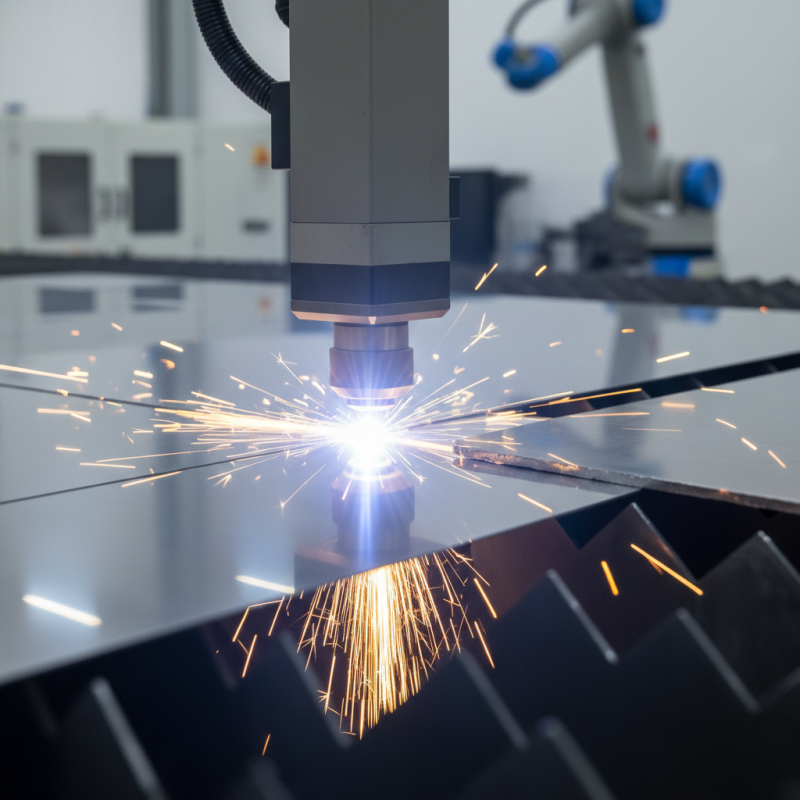
Traditional cutting methods often lead to material deformation. When mechanical blades cut through metal or plastic, they apply pressure unevenly. This pressure can create warping or bending, especially in thinner materials. The heat generated during cutting further contributes to this issue, causing undesirable changes in the material's structure.
In many cases, the results can be unpredictable. The deformation can vary from slight bends to significant structural failures. This makes quality control a challenge. Manufacturers must frequently check dimensions and tolerances. It is a time-consuming process, and mistakes can be costly. Using advanced techniques to minimize these effects can make a significant difference in production efficiency.
The question arises: how can we improve these methods? Experimentation is key. Exploring different cutting speeds and angles might help. Learning from past mistakes offers valuable insights. Additionally, understanding the material properties is crucial in deciding the best cutting technique. Finding a balance between speed and precision remains a continuous challenge in the industry.
| Cutting Method | Material Deformation Level | Heat Affected Zone (HAZ) | Cutting Speed (mm/min) | Edge Quality |
|---|---|---|---|---|
| Laser Cutting | Low | Minimal | 3000 | Smooth |
| Plasma Cutting | Moderate | Considerable | 1500 | Rough |
| Waterjet Cutting | Low | Minimal | 1000 | Smooth |
| Oxy-Fuel Cutting | High | Extensive | 500 | Rough |
Laser cutting technology operates on the principle of focusing a high-powered laser beam onto a material's surface. This concentrated energy melts, burns, or vaporizes the material, creating precise cuts with minimal physical force. The controlled nature of the laser beam allows for intricate designs and shapes that are difficult to achieve with traditional cutting methods.
One significant advantage of laser cutting is the minimal thermal influence on adjacent areas. Unlike mechanical cutting, where heat spreads, laser cutting limits heat-affected zones. This reduction in heat transfer helps to preserve the material’s integrity and structural properties. However, there can still be challenges; some materials may experience slight discoloration or warping. Understanding these nuances is crucial for optimizing the cutting process.
Additionally, laser cutting contributes to efficient material usage. Waste reduction is a priority for many industries, and laser cutting techniques facilitate this by enabling tighter nesting of parts on sheets. However, it’s essential to remember that achieving perfect results often requires trial and error. Fine-tuning parameters like speed and power settings can lead to variations in cut quality. Balancing precision and efficiency will yield the best outcomes in laser cutting applications.
This chart illustrates the percentage of material deformation for five different types of materials when subjected to laser cutting technology. The data demonstrates the effectiveness of laser cutting in minimizing deformation across various materials, showcasing its advantages in precision and efficiency.
In laser cutting, the heat-affected zone (HAZ) plays a crucial role in determining material integrity. When high-powered lasers engage materials, they generate heat that can alter the microstructure of a material. Reports indicate that the size of the HAZ can reach up to 2 mm in thickness, depending on the material and cutting parameters. This alteration can lead to weakened areas that may not withstand future stress or fatigue.
The consequences of an extensive HAZ include issues such as warping and residual stresses. For example, steel components subjected to laser cutting can experience a hardness variation of up to 30%, significantly affecting performance. A study from the Fabricators and Manufacturers Association noted that precise cutting parameters can reduce the HAZ by as much as 50%. However, achieving this requires careful calibration and expert knowledge of the material properties involved.
Even with advancements, not all scenarios yield optimal results. Some metals, like aluminum alloys, may have unpredictable responses due to their thermal conductivity. Users often find that cutting parameters must be adjusted when shifting from one material type to another. This complexity poses challenges in ensuring consistent quality across various production runs, necessitating continuous learning and adaptation in the laser cutting process.
In the quest for precision in manufacturing, laser cutting stands out for its ability to minimize material deformation. A recent study conducted by the International Journal of Mechanical Engineering reported that laser cutting processes result in an average material deformation of only 0.004 mm, significantly lower than the 0.1 mm associated with conventional cutting methods. This disparity highlights the advantage of laser technology in applications where precision is crucial.
One reason for this reduced deformation is the focused energy of laser beams. The rapid heating and cooling cycles create a narrower heat-affected zone (HAZ). A study in the Journal of Manufacturing Science and Engineering indicates that the HAZ in laser cutting can be as little as 0.01 mm, while traditional methods often exceed 0.5 mm. This precision means less warping, allowing components to maintain structural integrity.
Tip: For those incorporating laser cutting into their processes, consider the material type. Some metals, like aluminum, react better to laser cutting due to their thermal properties.
Yet, the higher operational costs can deter businesses. Laser cutting requires significant upfront investments. For small-scale operators, this can lead to tougher decisions. Balancing precision and cost is crucial.
Tip: Regularly assess the ROI on your cutting technology. Sometimes, investing in higher precision can save costs in post-processing and material waste.
Laser cutting technology has transformed various industries by effectively minimizing material deformation. Case studies illustrate how this process mitigates adverse effects during fabrication. For instance, in automotive manufacturing, precise laser cuts reduce heat-affected zones. This means less warping and improved fit for components.
In electronic device production, laser cutting efficiently shapes circuit boards without introducing stress. Engineers have noted a significant decrease in post-cutting defects. The lower energy input helps maintain the integrity of sensitive materials, which is vital for performance.
However, challenges remain. Different materials respond variably to laser cutting. Some thicker metals may still encounter deformation. Understanding these subtleties is crucial for engineers and manufacturers. Continual research and adaptation in techniques can enhance outcomes further. Engaging in these discussions helps improve practices across the board.
: Uneven pressure from mechanical blades leads to warping or bending in materials. Heat generated during cutting worsens this issue.
Deformation results can be unpredictable, affecting dimensions. Frequent checks for tolerances become time-consuming and may lead to costly mistakes.
Experimenting with different cutting speeds and angles can improve outcomes. Learning from past mistakes can offer valuable insights.
Laser cutting focuses a high-powered beam on a material, melting or vaporizing it to create precise cuts with minimal force.
Unlike mechanical cutting, laser cutting reduces heat transfer, preserving material integrity. However, some materials may still discolor or warp.
Laser cutting facilitates efficient material usage by allowing tighter nesting, which reduces waste significantly during production.
Variability in material response can lead to deformation. Different materials may experience varying effects, requiring careful handling.
They should fine-tune parameters like speed and power settings. Trial and error are often necessary for achieving best results.
Case studies show reduced deformation in industries like automotive and electronics, yet careful adaptation and understanding are needed.
Some thicker metals may still deform. Continuous research and practice adaptations are essential for improving cutting outcomes.
Laser cutting is a modern technique that significantly minimizes material deformation compared to traditional cutting methods. Understanding material deformation in conventional practices highlights the inherent challenges of heat distribution and mechanical stresses, which can compromise the integrity of the material. In contrast, laser cutting operates on the principles of high precision and controlled energy application, resulting in a narrower heat-affected zone. This precision reduces the impact on the surrounding material and limits warping and distortion.
Furthermore, quantitative analyses illustrate how laser cutting effectively reduces material deformation by maintaining tighter tolerances and finer edges. Several case studies demonstrate diverse applications where laser cutting technology minimizes deformation effects, proving its superiority over conventional methods. Overall, the question of how does laser cutting reduce material deformation is answered through its innovative approach in energy management and application efficiency.

Stylo Laser