China Top Laser Cutting Advantages Over Stamping?

Time:2026-09-14 Author:Charlotte
0%

China’s laser cutting industry is changing how manufacturers compare laser cutting with traditional stamping. The central question is simple: what are advantages of laser cutting over stamping?

In factories across China, operators use fiber lasers to cut steel plates, aluminum panels, and stainless-steel parts directly from digital drawings. No dedicated die is required. That difference can reduce preparation time, especially for prototypes, replacement parts, and low-volume orders. Design changes also move faster. An engineer can adjust a CAD file instead of rebuilding expensive tooling.

Professor Lin Li, a respected laser-processing researcher, has described laser processing as “a flexible manufacturing technology for producing high-value components.” His view reflects a practical advantage: lasers can create slots, holes, curves, and complex profiles within one setup. Stamping remains powerful for very high production volumes. Yet its tooling cost, storage needs, and design limitations can become burdensome.

Laser cutting may also reduce material waste through optimized nesting. It can produce clean edges with limited mechanical distortion. Automated loading and cutting further support consistent production. The results are measurable on the shop floor: fewer tooling changes, shorter development cycles, and faster response to custom orders.

Still, laser cutting is not perfect. Thick materials may require slower speeds. Heat can affect sensitive edges. Energy use and maintenance also deserve attention. A rushed comparison can mislead buyers. The better choice depends on material, quantity, tolerance, geometry, and total operating cost. This guide examines China’s leading laser cutting advantages over stamping with those practical limits in view.
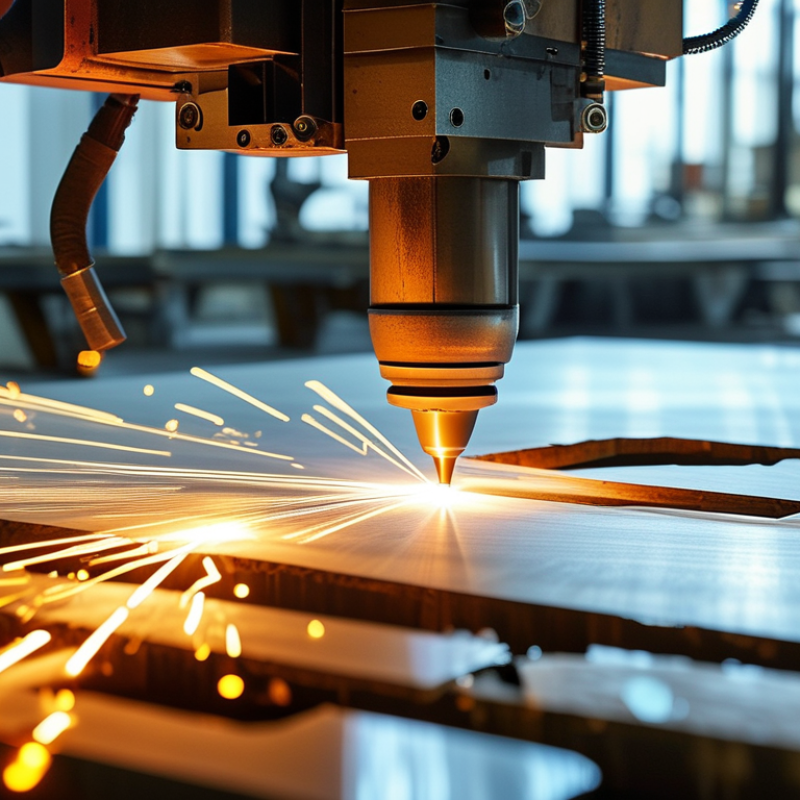
China Top Laser Cutting Advantages Over Stamping?

What Is Laser Cutting and How Does It Compare With Stamping?

Laser cutting uses a focused beam to melt or vaporize material along a computer-controlled path. It needs no physical die, so engineers can change holes, curves, and profiles quickly. The process works well for steel, stainless steel, aluminum, and many sheet-metal parts. A narrow kerf can leave clean edges, although heat may slightly discolor thin stainless steel.

Stamping uses a press and a shaped die to form or cut metal. It becomes highly efficient when thousands of identical parts are required. After the die is installed, each stroke can take only seconds. However, tooling costs, design revisions, and storage requirements can make early production expensive. Small errors in the die may also repeat across every part.

China’s laser-cutting sector often benefits from dense supplier networks, skilled operators, and flexible fabrication capacity. This can support fast prototyping and competitive pricing without committing to costly tooling. Yet laser cutting is not always cheaper. For very large volumes, stamping may reduce the unit price significantly. In a practical comparison, review material thickness, tolerance, quantity, edge quality, and secondary bending needs. Request a first-article inspection, measured dimensions, and material documentation. That assumption needs testing. A simple sample run can reveal warping, burrs, or fit problems before full production. I would also question unrealistic delivery promises, because speed can sometimes hide weak inspection procedures.

How Laser Cutting Supports Flexible Designs and Rapid Customization

China’s Top Laser Cutting Advantages Over Stamping

How Laser Cutting Supports Flexible Designs and Rapid Customization

Laser cutting gives manufacturers more freedom when designs change frequently. A digital drawing can be adjusted without producing a new stamping die. This reduces setup delays for prototypes, replacement parts, and short production runs. No new die.

In practical fabrication work, engineers can test different hole patterns, bends, and panel shapes quickly. Small batches become more economical because tooling costs are lower. Operators can also nest multiple part profiles on one sheet, reducing material waste. Changes happen quickly. This speed supports customized enclosures, brackets, machine covers, and architectural components.

Laser cutting is not perfect. Thick reflective materials may require careful parameter control and experienced operators. Heat can also affect thin edges, especially when designs contain many close cuts. Inspection remains essential. Teams should check dimensions, edge quality, and fit before approving larger quantities. Stamping may still perform better for very high volumes, where dedicated tooling delivers consistent cycle times. However, laser cutting offers a practical advantage when orders vary, deadlines move, or customers request late modifications. China’s broad manufacturing infrastructure can support this flexibility through integrated design, cutting, forming, and inspection processes. The real benefit appears when communication stays clear and production feedback reaches the design team early. Otherwise, even fast cutting can repeat the wrong decision.

China Top Laser Cutting Advantages Over Stamping? - How Laser Cutting Supports Flexible Designs and Rapid Customization

Evaluation Dimension Laser Cutting Metal Stamping Practical Advantage for Flexible Production
Tooling Requirement Usually no dedicated cutting die is required; a digital CAD file can control the process. A dedicated punch-and-die set is normally required for each part geometry. Reduces upfront tooling investment and makes small-batch or prototype production more practical.
Design Change Speed Changes are generally made by editing the CAD program and updating the cutting parameters. Design changes may require die modification, replacement, or a new tool. Supports rapid customization and shorter engineering change cycles.
Prototype Lead Time Often suitable for rapid prototype production because no forming die is needed. Usually longer when tooling design, fabrication, and trial adjustments are included. Enables faster design verification before committing to mass-production tooling.
Small-Batch Economics Generally favorable for low-volume orders because setup is primarily digital. Tooling cost can make low-volume parts less economical. Improves cost flexibility for samples, replacement parts, and customized orders.
Typical Material Thickness Common industrial systems process thin sheet and, depending on laser power and material, substantially thicker plate. Best suited to thickness ranges compatible with the press capacity, die design, and material strength. Offers broad material-thickness flexibility without requiring a separate forming die for every profile.
Shape Complexity Handles intricate contours, internal holes, narrow slots, and non-repeating profiles directly from digital drawings. Can produce complex parts, but the geometry must be compatible with punch, die, clearance, and forming constraints. Makes one-off and frequently changing geometries easier to manufacture.
Material Utilization Parts can often be tightly nested in software to reduce sheet offcut, subject to heat and process constraints. Layout is governed by the die design, part orientation, carrier strips, and stamping progression. Digital nesting can improve flexibility when part sizes and order quantities vary.
Production Speed Fast for many sheet-cutting applications, especially where setup and tooling would dominate the schedule. Often faster per piece in stable, high-volume production after the die and press line are fully set up. Laser cutting is advantageous for variable production; stamping is often advantageous for long, repetitive runs.
Part Versatility One machine can cut multiple part shapes by changing the program and material setup. A press line is often optimized around a specific die set or product family. Supports mixed-model manufacturing and frequent product updates.
Dimensional Accuracy Accuracy depends on machine condition, material, thermal effects, assist gas, and parameter control; production tolerances must be specified for each job. Can provide highly repeatable dimensions when the die, press, material, and process are properly controlled. Laser cutting provides strong flexibility, while stamping can be preferred for repeatability in mature high-volume programs.
Secondary Operations Cuts profiles without the forming features produced by a stamping die; bending, tapping, deburring, or welding may still be required. Stamping dies can combine blanking, piercing, bending, and forming in progressive or compound operations. The better method depends on whether the part needs flat cutting only or integrated forming operations.
Best-Fit Production Scenario Prototypes, customized parts, moderate volumes, frequent design changes, and mixed product batches. Large, stable production volumes with established geometry and predictable demand. Selecting the process according to volume, geometry, tolerances, material, and total tooling cost provides the best result.

Note: Values and comparisons represent typical manufacturing practice. Actual results depend on material grade, thickness, machine configuration, part geometry, required tolerances, production volume, and process parameters.

Why Laser Cutting Can Reduce Tooling Costs and Setup Time

In China’s metal fabrication sector, laser cutting is often chosen when designs change frequently or volumes remain uncertain. Unlike stamping, it usually does not require a dedicated die for every profile. This difference can lower upfront tooling costs, especially for prototypes, replacement parts, and short production runs. Engineers can send a revised CAD file instead of ordering a new mold. Setup often means selecting the material, checking the program, and confirming cutting parameters. This can shorten preparation from days to hours.

The savings are not automatic. Cutting speed, material thickness, edge quality, and order quantity still affect the final price. Small mistakes in the drawing can create scrap. That part is easy to overlook. From my experience reviewing fabricated parts, laser cutting provides practical flexibility when dimensions change during development. It also supports small batches without storing multiple dies. However, stamping may become more economical for very large, stable orders with simple shapes. A reliable cost comparison should include programming, tooling maintenance, material waste, labor, and inspection time. Ask for sample cuts and measurable tolerances before approving production. A clear drawing matters. Do not compare only the machine rate.

How Material Thickness and Complexity Affect Process Selection

Choosing between laser cutting and stamping depends heavily on thickness and part complexity. Thin sheet with repeated, simple profiles often favors stamping. A dedicated die can produce thousands of identical parts quickly. Cycle times stay short. Yet tooling costs and setup time may challenge small batches. Laser cutting avoids dedicated dies, making design changes less painful. It suits prototypes and changing production volumes.

Thickness changes the balance. Laser systems can process medium and thick plate, but cutting speed usually falls as thickness rises. Heat input may create a wider affected zone, dross, or edge taper. Stamping thin material is efficient, but thicker stock demands greater press force and stronger tooling. Springback can shift critical dimensions. A process review should check actual tolerances, not only machine capacity. Small holes are a warning. Their diameter-to-thickness ratio may limit either method.

Complexity matters just as much. Laser cutting handles intricate contours, narrow slots, and frequent revisions without changing hard tooling. Stamping becomes attractive when geometry repeats and includes forming, embossing, or multiple bends. In practical production reviews, the lowest cutting rate has not always produced the lowest part cost. Not always. Scrap nesting, deburring, inspection, and secondary forming can change the result. A representative sample should include the thickest region and smallest feature. This rule is imperfect. Details matter.

When Laser Cutting Offers Greater Value Than Stamping

China Top Laser Cutting Advantages Over Stamping?

When Laser Cutting Offers Greater Value Than Stamping

Laser cutting creates greater value when product variety matters more than repetition. A digital drawing can move from design to production without a new die. This shortens preparation time for prototypes, replacement parts, and low-volume orders. In China’s fast-moving manufacturing market, that flexibility can prevent weeks of tooling delays. The 2024 China Statistical Yearbook reported continued growth in high-technology manufacturing output, reflecting stronger demand for adaptable production methods.

Laser cutting also reduces several hidden costs. It can process complex contours, small holes, and mixed batches with limited setup. Material nesting software can improve sheet utilization, although results depend on geometry and operator skill. The U.S. Department of Energy’s Industrial Decarbonization Roadmap identifies material efficiency as a major emissions-reduction opportunity. Less scrap means lower purchasing, handling, and recycling costs. That benefit is easy to measure on a busy factory floor.

Still, stamping remains powerful for stable, high-volume parts. Its cycle speed can outperform laser cutting after tooling costs are recovered. A 2024 industry outlook from the International Federation of Robotics also highlights automation as a key productivity driver, and both processes can use it. Laser cutting is not automatically cheaper. Thick reflective metals, rough edges, and secondary finishing may change the calculation. I would challenge any simple claim of superiority. For short runs, frequent design changes, and intricate profiles, laser cutting often delivers stronger value. For millions of identical parts, stamping may remain the more disciplined choice.

FAQS

How does laser cutting support flexible product designs?

Engineers can revise digital drawings without making a new stamping die. A revised hole pattern can reach production quickly. No new die.

Can laser cutting reduce tooling costs?

It often reduces upfront tooling expenses for prototypes, replacements, and short runs. Teams usually adjust CAD files instead of ordering new molds. The savings are not automatic.

How quickly can setup changes happen?

Setup may take hours instead of days when material and parameters are already understood. Operators check the program, sheet type, and cutting settings. Small errors still cause delays.

Which products suit rapid laser customization?

Common examples include enclosures, brackets, machine covers, and architectural panels. Different profiles can be nested on one sheet. That can reduce scrap.

Does laser cutting reduce material waste?

Nesting several part shapes together can use sheet material more efficiently. The result depends on spacing, kerf width, and the drawing layout. Poor nesting wastes material.

What limitations should engineers consider?

Thick or reflective materials may need careful parameter control and skilled operators. Heat can affect thin edges with many nearby cuts. Inspection remains necessary.

Is laser cutting always cheaper than stamping?

No. Stamping may cost less for very large, stable orders with simple shapes. A fair comparison includes tooling, programming, waste, labor, and inspection. Machine rates alone mislead.

What should teams inspect before approving production?

Check dimensions, edge quality, hole locations, and final fit using sample parts. Feedback should reach the design team early. Otherwise, fast cutting repeats the wrong decision.

Conclusion

Laser cutting and stamping are both effective methods for producing metal parts, but they serve different production needs. Laser cutting uses a focused beam to create precise shapes directly from digital designs, while stamping relies on dedicated dies and press equipment. For businesses handling varied designs, small batches, prototypes, or frequent revisions, laser cutting provides greater flexibility and faster customization without requiring a new die for every change. This makes it easier to produce complex contours, detailed openings, and customized components with consistent accuracy.

A key question is: what are advantages of laser cutting over stamping? The main benefits include reduced tooling costs, shorter setup times, and efficient design updates. Laser cutting is especially valuable when material thickness, part complexity, or production volume makes stamping less practical. Although stamping may be more economical for very large quantities of simple, repeated parts, laser cutting often delivers better overall value when flexibility, precision, and rapid production are important.

Charlotte

Charlotte

Charlotte is a seasoned marketing professional with a deep understanding of the company's portfolio and a passion for elevating its presence in the market. With a keen eye for detail and a commitment to excellence, she ensures that our professional blog is regularly updated with insightful articles......