Explore our state-of-the-art machinery and components designed for global smart manufacturing and precision fabrication.
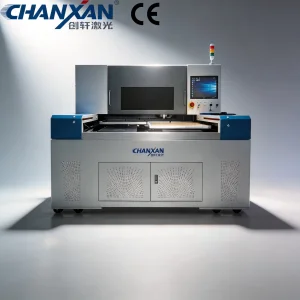
In modern industrial fabrication, traditional flatbed 2D laser cutters are rapidly being augmented and replaced by multi-axis Robotic Laser Cutting Systems. This technology integrates the kinematic flexibility of articulated industrial robotic arms (typically featuring 6 or more axes of motion) with the extreme energy density and focused precision of fiber lasers. The resulting systems allow manufacturing plants to perform high-precision trimming, beveling, and piercing on complex three-dimensional geometries, hydroformed parts, and pressed panels without the need for multiple manual setups or expensive die stampings.
With search engines prioritizing deep-domain expert information (E-E-A-T), this guide breaks down the procurement paradigms, technological parameters, and structural benefits that manufacturing buyers and engineers must evaluate when partnering with a top-tier robotic laser cutting systems factory.
The global demand for robotic laser cutting systems is driven by high-growth industrial sectors including automotive chassis manufacturing, aerospace components, customized metal fabrication, new energy battery trays, and heavy-duty structural steel production. As manufacturers transition from high-volume, low-mix models to highly customized, high-mix models, traditional mechanical cutting and stamping setups become cost-prohibitive due to tooling setup times and capital expenses.
Robotic fiber laser cutting bridges this gap. By utilizing offline programming (OLP) software, engineers can program complex 3D paths directly from CAD files. This eliminates weeks of tooling preparation, reducing time-to-market for critical components from months to days. Internationally, the automotive and aerospace industries occupy the largest share of the market, requiring certified robotic integration with sub-millimeter tolerances and dynamic optical focus control.
Advancements in robotics and photonics are transforming industrial shop floors. The key technological trends shaping the industry include:
Procuring a robotic laser cutting system is a complex capital expenditure. Corporate buyers must evaluate various technical parameters to ensure structural compatibility, ROI, and reliability. The table below lists the essential evaluation framework utilized by leading procurement specialists:
| Evaluation Parameter | Industry Standard Target | Impact on Production Operations |
|---|---|---|
| Repeatability & Positioning Accuracy | ±0.03 mm to ±0.05 mm | Directly influences joint alignment during subsequent robotic welding phases. |
| Reach and Working Envelope | 1500 mm to 3100 mm (6-Axis) | Determines the maximum dimensions of 3D parts processed without rotating positioners. |
| Fiber Laser Beam Quality (M²) | M² < 1.1 to 1.3 | Determines focus spot size, cutting speed, and kerf width of high-end alloys. |
| Dynamic Gas Selection Controls | Auto-switching N₂ / O₂ / Dry Air | Allows optimization for clean oxide-free edges (N₂) or cost-effective carbon steel cuts (Air). |
| HMI and Industry 4.0 Compatibility | OPC UA, EtherCAT, Profinet | Supports integration into plant-wide ERP and MES networks for live efficiency tracking. |
A common error in purchasing is underestimating the rigidity requirement of the robot arm. Articulated arms designed for handling materials do not always have the structural rigidity required to counter high-inertia forces generated during high-speed cutting maneuvers. This results in micro-chatter, rough cut profiles, and premature wear of the optical focusing lenses. Leading manufacturers integrate dedicated, reinforced high-speed robotic systems designed specifically for precise laser paths.
China's industrial landscape has transitioned from low-cost manual assembly to state-of-the-art smart factories operating under Industry 4.0 paradigms. For global enterprises looking for dependable OEM and ODM partners, Chinese laser cutting system manufacturers present significant supply chain advantages:
In addition, the implementation of rigorous quality management systems (ISO 9001, CE conformity, and FDA registrations for laser enclosures) has ensured that top-tier Chinese robotic systems easily meet the compliance requirements of North American, European, and Asia-Pacific markets.
Foshan Stylo Laser Co., Ltd. is a professional manufacturer specializing in advanced industrial laser processing equipment, focusing on ceramic laser cutting machines and silicon steel laser cutting systems. The company is dedicated to delivering high-precision, high-efficiency laser solutions for modern manufacturing industries that require superior accuracy and stable performance.
Its core technology is applied in the processing of ceramic materials, electrical steel, and other advanced industrial materials used in transformers, electronics, energy systems, and precision components. By integrating fiber laser technology, CNC control systems, and intelligent automation, Foshan Stylo Laser provides cutting solutions that improve production efficiency while maintaining exceptional cutting quality and minimal material deformation.
The company’s equipment is widely used in industries such as power transmission, semiconductor manufacturing, electrical engineering, and high-end industrial manufacturing. It supports flexible production needs ranging from micro-precision cutting to large-scale industrial processing.
Foshan Stylo Laser Co., Ltd. emphasizes innovation, engineering excellence, and strict quality control. It also provides OEM and ODM customization services to meet diverse global customer requirements. With continuous investment in research and development, the company aims to advance laser processing technology and become a trusted global supplier of precision laser cutting solutions for ceramic, silicon steel, and advanced industrial materials.
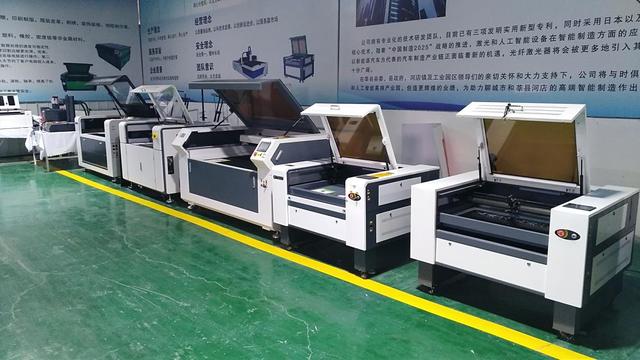
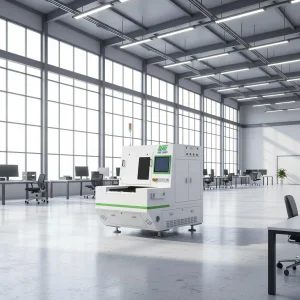
Below is a visual overview of our manufacturing floors, quality testing zones, and robotic assembly lines that confirm our advanced technological footprint:


Different markets present distinct mechanical, structural, and material constraints. Below are some of the primary application areas where our customized systems are implemented:
High-strength boron steels used in modern vehicle safety cells are incredibly difficult to stamp using traditional dies. Robotic laser cutters are deployed in automotive facilities worldwide to trim and pierce holes on these formed 3D structural parts with zero contact pressure, avoiding micro-cracks and extending component fatigue life.
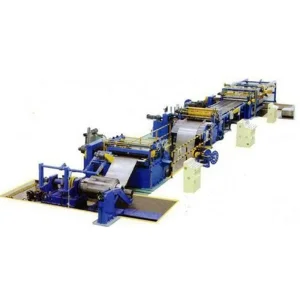
Electrical steel used in power transformers and electric vehicle motors requires highly precise slitting to maintain energy conversion efficiency. Our silicon steel slitting line machines minimize edge stress and burr height, reducing electromagnetic losses and eddy current generation in final transformer stacks.
High-end electronics and semiconductor manufacturing demand ultra-thin zirconia and alumina ceramic substrates. Applying traditional lasers to these materials induces high thermal stress, leading to structural micro-cracks. Through water-guided laser technology, we offer ultra-thin zirconia ceramic cutting machines that reduce heat buildup, delivering clean, crack-free edges.
Modern mobile phones, wearables, and medical devices depend on flexible electronics. Using precision picosecond or nanosecond UV laser systems, manufacturers can perform high-speed window cutting with high yields, and cut components with minimal pad size requirements.
Essential technical insights on robotic laser cutting technology and procurement processes.
Select high-performance industrial machines and optical components for your factory upgrades.

 Stylo Laser